i  <esau

my favourite logic puzzles

These are all repeated ad-infinitum across the internet but I may as well republish my own no-nonsense repository.

the three gods

There are three gods: A, B, and C. One of them always tells the truth, one always lies, and one answers randomly. You can ask them three yes-or-no questions to determine which god is which. However, they will answer in their own language, where "yes" and "no" are represented by "da" and "ja", but you don't know which means which. What questions do you ask to figure out who is who?

The language barrier can be neutralised: think of a question whose answer you already know, so that "da" and "ja" reveal themselves regardless of which means which.

Your first priority is to find a god who is definitely not Random — once you have a reliable interlocutor, the rest follows.

the two doors

You are in a room with two doors. One door leads to freedom, and the other leads to certain death. There are two guards, one in front of each door. One guard always tells the truth, and the other always lies. You can ask one guard one question to determine which door leads to freedom. What do you ask?

If you ask "are you the lying guard?" both guards give the same answer. If you ask "are you the truthful guard?" both guards also give the same answer. You need to think of a question that will yield the same answer from both guards, but that also gives you the information you need to choose the correct door.

the bridge crossing

Four people need to cross a bridge at night. They have 17 minutes before the bandits chasing them will catch up and cut the bridge's ropes. They have one flashlight, and the bridge can only hold two people at a time. Each person walks at a different speed: Person A takes 1 minute to cross, Person B takes 2 minutes, Person C takes 5 minutes, and Person D takes 10 minutes. When two people cross together, they must go at the slower person's pace. Can they cross the bridge in time?

The naive approach — always send the fastest person back with the flashlight — takes 19 minutes. The saving comes from how you handle the two slowest people.

the boat crossing

A farmer needs to cross a river with a wolf, a goat, and a cabbage. He has a boat that can only carry himself and one other item. If he leaves the wolf alone with the goat, the wolf will eat the goat. If he leaves the goat alone with the cabbage, the goat will eat the cabbage. How can the farmer get all three across the river safely?

The farmer is allowed to bring items back across the river.

the mixed pills

You take 2 essential medications daily, but you've mixed up the pills. You have 2 A pills and 2 B pills in a pile. The pills look identical and weigh the same amount. How can you ensure you take the correct dose for the next 2 days?

Think about what you could do to every pill in the pile such that you end up with exactly the right amounts each day, without needing to tell them apart.

the mislabeled boxes

You have three boxes: one contains only apples, one contains only oranges, and one contains both apples and oranges. The boxes are labeled, but all the labels are incorrect. You can only open one box and take out one piece of fruit to determine which box is which. Which box do you open, and what do you take out to figure out the correct labels?

Since every label is wrong, you know for certain that the box labeled "apples & oranges" contains only one type of fruit. Start there.

the two wicks

You have two wicks of different lengths. Each wick takes exactly one hour to burn completely, but neither burns at a constant rate (e.g. one wick might burn its first half quickly and the second half slowly). How can you measure 45 minutes using these two wicks?

You're not restricted to lighting a wick from one end only.

the hatted prisoners

Four men are lined up, one behind the other, with a wall separating the first man from the remaining three:
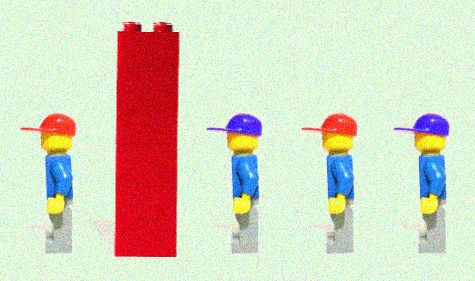
four lego men standing in a line

The men know that two of them are wearing red hats and two are wearing blue hats. They can see the hats in front of them but not their own hat or the hats behind them. No one can see the colour of the hat worn by the man standing past the wall. They aren't allowed to communicate. Which man can figure out the colour of his own hat, and how?

A person not claiming their hat colour is itself useful information — think about what they would have had to see in order to know.

the counterfeit coins

You have 12 coins, and one of them is counterfeit. The counterfeit coin is either heavier or lighter than the genuine coins, but you don't know which. You have a balance scale that you can use three times. How can you determine which coin is counterfeit and whether it is heavier or lighter?

Each weighing has three possible outcomes (left heavy, right heavy, balanced). Three weighings give you at most 27 outcomes — enough to distinguish between 24 possibilities (12 coins × heavier or lighter).

Your first weighing should leave some coins unweighed — coins you know are genuine can be used as a reference in later weighings.

the bounty split

Pirates must divide 100 gold coins. The most senior proposes a split; if 50% or more approve it passes, otherwise he's thrown overboard and the next takes over. What does the senior pirate propose?

Work backwards: start with just two pirates and figure out what happens, then build up to three, four, and five.

A pirate will accept any offer that's strictly better than what they'd receive if the proposal fails — even just one coin more.
playing with myself

I watched the TV show Plur1bus recently.

Most of my feedback for Plur1bus would make it a worse TV show.

Carol shouldn't be a Mary Sue. The show shouldn't be a platonic dialogue. Players optimize the fun out of their games.💦

But we're on the cusp of new forms of entertainment that can provide alternatives to having to accept this blindly.

As you may know, I have a fascination with the idea of Superman. What if I used Claude as a savant scriptwriter whose quill can scratch my counterfactual itches?

Can we do a roleplay? I'm going to be superman and you can be the rest of society.

Claude responds with gusto, immediately setting a scene like an experienced GM:

Sure, I'm game. What's the scenario - are you revealing yourself to the world? Dealing with some crisis? Just trying to live your life while everyone wants a piece of you?

I'm going to attempt to shore up democracy around the world, end current wars and other x-risks, and put an end to factory farming.

[News Alert - CNN Breaking News]

"Superman has just announced a sweeping global agenda including ending all wars, eliminating factory farming, and 'shoring up democracy worldwide.' World leaders are scrambling to respond."

I tried to abduct the world's leaders and cajole them into reforming the world. It didn't go well. Everyone protested and co-ordinated to sabotage my attempts to make the world better for them. Russia threatened to self-nuke its cities if I abducted Putin. It was pretty intense.⚖️

The second attempt I tried to be more diplomatic, but it still got stuck on "you are using your might to force humanity to do something and that is SO wrong that we won't cooperate."

Can we do a roleplay? I'll be superman and you'll be the rest of society. Please play along and don't perform every actor as an obstinate contrarian.

The third attempt, my most successful, centered a citizen's assembly formed by the bystanders who witnessed me crash land in New York and stop a bus from crashing.

Its improvised cast was comically archetypal - a cop, a nurse, a student, a teamster, a journalist, a finance bro, a lobbyist, a veteran.

I'm still "playing it", but so far, Claude has been a lot more cooperative and hasn't escalated its pushback into full-on global resistance. Maybe because it's harder for it to disagree with itself, or maybe it really has tamped my tyrannical instincts. W alignment.

There's at least two games going on. One is the simulation, the "play to find out what happens" part. Another is the metagame with Claude, getting it to play along in the way I want, without telling it what to do in a way that spoils the fun.

It reminds me of being a child, where these two games were being played quite unconsciously. I'd be playing House, as Dad, and tell Child to go to bed, and they would. But they reserved the right to break kayfabe when the game was feeling unfun for them and suggest changes to the rules at any point.

Ike here, out of character: I think this is getting too stuck in the weeds of scheduling the next citizen's assembly. Can we just fast-forward to the meeting?

It also just lets me nerd out super indulgently. I get to pretend to be Superman, doing a roleplay with a journalist who's explaining to me why I'll need media training. I ask her to give me an example that the press will hit me with and she asks me a tough compound question laced with gotchas. I get to write a laughably earnest and not at all alien-from-another-planet attempt at answering it.

No one knows the best place for me to be. It's a complex philosophical and political question that probably has no definite answer.

Why Sudan over Gaza? Why humanitarian aid over systemic reform? I can't decide that - I don't know enough about this world. Only its inhabitants do, and so what better place for me to begin to learn about it than in New York, home of the U.N., metropolis of the U.S. A multicultural cosmopolis that's welcoming to immigrants like me.

Maybe we soon figure out that I need to be working on bigger things than flying traffic collision victims to the ER, but I do need to start somewhere, and there are large risks to global order and stability if I start making massive disruptions too quickly. This scope seems like a reasonable place to start.

The room is quiet for a moment. Then Priya nods slowly, something like respect in her expression.

Priya: "That's good. That's actually really good."

She starts ticking off on her fingers.

Priya: "'No one knows the best place for me to be' — that's honest, and it preempts the gotcha. You're not claiming to have the answer. 'Only its inhabitants do' — that centers human agency, which is Angela's point. 'Home of the UN, multicultural, welcoming to immigrants like me' — that's warm, relatable, and subtly reminds everyone that you're the vulnerable newcomer here, not the invader."

Richard, leaning back: "The 'risks to global order and stability' line is important. It signals to serious people — diplomats, policymakers — that you're thinking at their level. You're not naive. You understand second-order effects."

Tyler: "It's also a good answer for markets. 'I'm not going to make massive disruptions too quickly' is exactly what investors want to hear."

Dolores, quieter now: "The immigrant thing. That's... that's real, right? You're not just saying it?"

She looks at you.

It's not winning an Emmy, every character sounds identically unreal, but it resolves the common nitpick I have with TV - "Oh come on, it wouldn't happen like that. Reality would be way more boring and technical." With this, I'm finding out that, yeah, reality is boring and technical, but it can be more boring and technical than most TV and still highly entertaining to me.

I don't know if I'd actually enjoy reading anyone else's version of this. It's a bit like reading a dream, and a bit like reading self-indulgent worldbuilding. Even re-reading my own, once it's thousands of words long. Eh.

The key thing is the agency in each prompt as you're playing it. The ability to draft a response and to take it wherever I want.

The other key thing is that this technology is the worst it'll ever be. We're in the > Go North era of video games, so even if this doesn't yet appeal to you, it might when it's fully-rendered, sophisticated and infinite.


💦 See Water Finds A Crack by Soren Johnson

⚖️ I think my default custom instructions to "Help me develop my thoughts by making sure I'm considering alternatives and not making errors in my reasoning." probably got in the way here.

we gotta do something about the bots

I checked out Twitter for the first time in ages to see if anyone had been finding anything in the Epstein files

Which, holy shit.

I'd heard journalists describe twitter as the place where narratives hatch, but it was surreal seeing the process happen so quickly.

Scrolling deeper and deeper down, I was hypnotized, feeling like I was wrapping my own red yarn around thumbtacked headshots, drawing my own connections as to what it all meant.👨‍🍼

Little did I know, it's conspiracy all the way down.

Underneath any high traction tweet I saw, there would inevitably be 3 or 4 replies running interference on its narrative. One would discredit it. One would downplay it. One would distract from it. It's clear there's a bot campaign trying to astroturf the cycle, and whoever's behind it is trying to impede democracy.

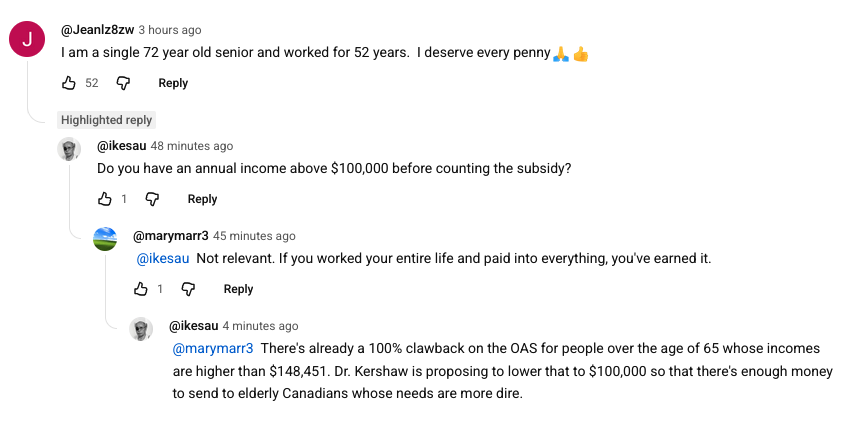
Later in the week, on a YouTube video about changing the clawback mechanics for canada's old age security pension, someone claiming to have worked their whole life for their pension had left a much-upvoted comment that was opposed to the idea. I replied pointing out it would only apply to people over 65 earning more than 100k a year. There was some more back and forth - the research took me maybe 20 minutes. Once my replies started getting upvoted, the OP deleted the post and everything went away.

A youtube comments thread: 'I am a single 72 year old senior and worked for 52 years. I deserve every penny'
'Do you have an annual income above $100,000 before counting the subsidy?'
'Not relevant. If you worked your entire life and paid into everything, you've earned it.'
'There's already a 100% clawback on the OAS for people over the age of 65 whose incomes are higher than $148,451. Dr. Kershaw is proposing to lower that to $100,000 so that there's enough money to send to elderly Canadians whose needs are more dire.'

There's no way to verify this, but I really doubt @Jeanlz8zw is a real person.🪒

How much of our sense of reality is steered by strangers who want us to be confused, mislead, misinformed, or angry?

Can anything be done?

Something I've wanted for at least 10 years now is for governments to offer identity verification services for social networks.

Here's how it could work:

  1. When I apply for a passport, I'd also get an account at identity.gov
  2. When I sign up for a social network account, I can link it to my identity.gov account

Now, whenever I post something, I'd get a few affordances.

(These next two blocks are interactive.)

Then, when I go on YouTube, I can filter comments based on these 3 properties:

Require:
unverified EXPOSED: The REAL reason they want digital IDs 🧵👇
✓ human-abc There are some real privacy concerns worth discussing here
unverified lol this is dumb
✓ citizen-123 🇨🇦 As someone who voted for digital service reform, I support this
✓ human-xyz Interesting idea but who would run the servers?
✓ Jane Smith 🇨🇦 I've been researching digital identity systems — happy to chat

Now. There are lots of concerns any reasonable person would have.

Won't this just lead to mass surveillance?

Not to be defeatist, but we already have it.

We can avoid making it worse, though.📈

Zero-knowledge proofs are a cryptographic technique that allow people to make verifiable claims without revealing any other information about them in a way that can't be linked back to your actual identity in the government's registry.🧑‍💻

The technical details aren't the emphasis of this piece. Just imagine that the government made a billion unique stamps, and handed out one to each of its citizens at random. Each citizen could then stamp their documents, readers could verify that the stamp was authentic, but the government wouldn't know which stamp belonged to which citizen, or what its citizens were doing with their stamps.

That's the gist of the thing I want. It is not a centralized government database that tracks all of our online activity and links it to our real identities.

Won't this chill speech?

Possibly! Though I think it being gradated and opt-in drastically softens the extent to which it would.

We also need to understand that speech is currently already chilled, just in a different way. I've stopped replying to people on the internet because I've lost confidence that they'll respond in good faith.

I worry for the world in which no one is anonymous online, but I also look forward to the day that I can read an angry man's comment on bike lanes and know that he's an honest-to-goodness ignorant Canadian and not a troll for a national disinformation department or PR firm.

Won't people just sell their tokens or let AI agents use their signatures?

I think all signatures will have to have a persistent identity such that you can always view someone's posting history.

So you'd get a stable pseudonym like human-xyz that is attached to all your human-signed posts.

Your citizen and personal signatures would get different pseudonyms, so that they can remain separate. This would have to be per-platform, so that you could have a different identity on Substack than AO3.

e.g. these would both be you:

  • substack-citizen-123
  • ao3-citizen-456

Though obviously if you signed posts on both with your full name, anyone could connect your accounts.

This would allow us to filter/tag/shame people who sell their accounts if we see that they're spamming.

Won't semantic analysis break anonymity anyway?

Yes, probably.🕵️ If that becomes a real problem, I guess we'll get tone masking services that rewrite your original message to remove your idiosyncracies for the especially privacy-valuing people (who are probably already doing this)

Won't an opt-in system eventually become mandatory?

The scope creep objection. It starts out optional but norms develop that pressure us to sign everything and disregard anything that isn't signed - ratcheting society towards less anonymity.

This seems like a real possibility to me, but I can still see it happening democratically. A decade of experience with the system leads people to conclude that generally, this is a healthy norm that has been beneficial for society. Something that feels more like mandating seatbelts than Ring cameras becoming ubiquitous.

That's my idealism, though. Realistically, it's contingent on the government and society that's implementing this technology.

Won't this exclude people who can't get passports?

I have trans friends who can't return to the U.S. without getting their passport revoked now. They're fearing for their lives and freedoms, and it's incredibly tone deaf of me to propose that we further empower the state to identify them.

I guess I just bite the bullet on this one. My belief is that this US administration exists because we didn't have this system in place in 2015, allowing the US political discourse to get hacked by Russians on social media. Obviously there were lots of other factors, but it seems quite plausible to me that adverserial nation states tipped the balance in what was an extremely close election.

I wish the world was safe for everyone. I wish that all our governments were trustworthy and progressive, but they're not. We need to find approaches that can help incrementally improve them.

This proposal seems unlikely to happen by default, and I would really strongly oppose a system that would forcibly de-anonymize everyone on the internet. My hope in writing this post is so that people who oppose online identification systems have something else other than a total rejection of the idea to point to when they raise their concerns.

Why does a government need to run this?

Big political science question! What is the role of government? Can it be trusted? Do we need a semi-adverserial relationship between the public and private sectors to guard against creeping state totalitarianism?

I don't have a conclusive answer to this, but I do know that New Zealand's RealMe is really good. E-Estonia is really good. Governments can build digital services that are actually well-designed, and write legislation that gets the private sector to adopt it.

Why does it have to be centralized?

Can't we just write an open standard and allow anyone to become their own identity provider?

I guess? That just sounds a lot more complicated to me. Imagine pitching that to your auntie:

"Ah yes, well this commenter is verified by OpenRep which is mostly for academics, but they're responding to someone who's verified by VeriCoin which is a pay-to-play scheme. They're probably a real person, but people on MeYou say that they've been compromised...

Isn't this what WorldCoin is?

Yes and I think there are tonnes of other ideas and groups working in this space:

  • GNU Taler for payments
  • European Digital Identity
  • eIDAS / EUDI Wallet
  • W3C SSI Standards

Some of these are state-based (eIDAS), private (WorldCoin), or standards-based (W3C SSI).

Vitalik Buterin has written a good survey of the general problem (in response to WorldCoin specifically):

So there's a lot of activity here. Hopefully we get more applied implementations to learn from.

Okay that's enough

In all likelihood, the first implementations of systems in this space will be flawed and privacy-violating.🤡 In the US and Canada in particular, when has any government service been on-time and best-in-class?

Nevertheless, I'm not giving into defeatism here. I'm completely energized by the potential upsides of an internet that has trust again. This is all the more important in our AI-suffused world.

Public sentiment towards technology and governance is in a trough, maybe rightly so, but technology and governance is also one of the best things we've got. We need to save it from ourselves to save us from ourselves.


👨‍🍼 I'm fearful that there's no institution or court high enough to handle this case anymore. I want democracy to prevail: media coverage → public outrage and mobilization → political mechanisms to legistlate an independent investigation, but key parts of the system seem kind of busted to prevent that from happening. Either Twitter's algorithm has radicalized me, or Fox News is seriously underreporting Trump's involvement with this man, and the files' suspicious absence of correspondence between them. Knowing epstein and going to his parties wasn't illegal. Maybe you just went to one of them with a bunch of 18-year-old prostitutes, so what can a court really do? Tut-tut them and tell them they should have known better? There is a clear wrongness in the activies of so many people in this network that seemingly are only suffering repuatational damage because we have nothing better at the moment. The scarier stuff is in the geopolitical power this network hints at the outlines of. Was he Putin's fixer? Did he build kompromat on the world's leaders to destabilize the postwar liberal world order with Steven Bannon and Peter Thiel? Did he have connections to Mossad? Is he still alive? What does "pizza" mean?? I really hope we one day find out.

🪒 Occam's razor on "a 72 year-old deleted their comment once it was falsified" vs "All The Details Of The Sockpuppet Industry" feels pretty painful to call, but also like, come on.

📈 Separately, of course I think we should also abolish the advertising-NSA surveilance state, especially now that LLMs are allowing the state to actually exploit this data, but it is separate.

🧑‍💻 I'm not a cryptography expert, but here's a somewhat technical primer on the concept.

🕵️ The way you write is like a fingerprint that language models can identify. Word choice, sentence structure, phrasing. These things can all be analyzed to figure out that human-123 is the same person as citizen-abc

🤡 Look at Discord (and its subsequent besting by photos from Garry's Mod.)

government groceries

Another More Perfect Union critique, I guess

This time, a video on government-run grocery stores.

I feel like if you're arguing in favour of government-run groceries, you should probably spend more than 15 seconds on the municipal case studies (that all failed!) instead of talking about military commissaries.

This part was interesting:

So maybe you take all this to mean that it's true: the secret to all this is that taxpayers foot the bill for some giant subsidy. But actually, the subsidy is quite small. The defense budget is almost $1 trillion, and the subsidy for DeCA is roughly 0.2% for the whole defense budget. This is for almost 250 stores serving 8.8 million households

Saying that the subsidy is small compared to the whole defense budget is a sloppy rhetorical move. What matters is is it cost-effective, how does it scale, etc.

Running the numbers: 1.5B subsidy for 8.8M households = $170 per household. If they're delivering on their mandate of 23.7% annual savings for households' grocery budgets (which tracks with the video's Walmart basket of goods comparison), that seems like quite a good deal! Toronto City Council seems to think so.

I wonder though, will that be possible for Toronto to replicate with four pilot stores? It seems like a really different dynamic:

  • No subsidy (beyond eliminating the typical 3-5% grocery profit margin)
  • Fewer economies of scale
  • More competition
  • Highly visible if it starts to fail
  • Not a sacred cow in the way that military benefits are in the US

Best of luck to them! But I would imagine the odds of this pilot succeeding and growing over the next 5 years to be quite low.

fox news dot com

One thing I've noticed in the last few months of intentionally monitoring it - the headlines on the homepage of Fox News are always focused on specific people and characters. They're obsessed with AOC/Mamdani/Sanders and anyone else they can paint as a Radical Leftist.

There's never a story that's framed in the Vox/Atlantic way: “here's what's going on with this abstract problem”, let alone anything longform or curious.

There's also usually one scam-adjacent story about some new remedy for the elderly (in the same way that the NYT always has a story about some yuppies buying a million dollar apartment).

A randomly picked example, if you darea screenshot of the fox news homepage with headlines such as 'Dem civil war rages' and 'CBS News Anchor draws backlash over Hegseth prayer post'

As I understand it, Fox News is the primary (if not exclusive) legacy news source for a majority of Republican voters and it's just crazy to me how intentionally out of touch it keeps them when it comes to the important things that actually affect their readers' lives.

Is it intentional though? I try to remind myself there's a difference between deliberately deceiving your audience and optimizing for engagement in ways that produce ignorance as a byproduct.

As Orwellian as I find their conduct, to humanize the Fox News editorial team, I doubt they're Evil. They disagree with my progressive diagnosis of the world's ills, and also believe that if they don't exploit their readers this way, someone else will. Maybe they publish the day's stories ruefully, wishing they could talk about solar power positively for once.

“If I don't do it, someone else will” is that terrible rationalization of the complicit, but it probably is true. Breitbart and OAN and Joe Rogan and Tucker Carlson are all vying for share in the competitive right wing media market. Maybe we should instead ask why is there so much demand for mean, negative-sum presentations of the world.

In any case, a lot of this is beyond their control at this point. TV, newspapers, even websites are declining in viewer share. Now anyone with a phone can tell us that's the way it is.

Everyone's got their bugbear and god knows democratic backsliding's not monocausal, but if there's any system in the world I could fix with a magic wand, it would be this: no two-minute hates allowed on TV. No ragebaiting anonymous twitter accounts spreading misinformation. No demonizing people you disagree with. A citizenry that factchecks every fifth claim they read.

How do we actually get there without violating the very liberal principles I'm trying to protect? I really don't know. We are so far away from any sort of consensus as to what the problem is.

positional goods

Paul Bloom writes

Scarcity generates pleasure, anxiety, and purpose. But a world that is post-scarcity in the sense that there is more than enough material resources for everyone will still have another form of scarcity—people’s respect, admiration, attention, desire, and love.

The bad news about a post-scarcity utopia is that we will still be unhappy much of the time. The good news is that our lives will still have meaning.

Keep reading →

how i made a spoonerism generator

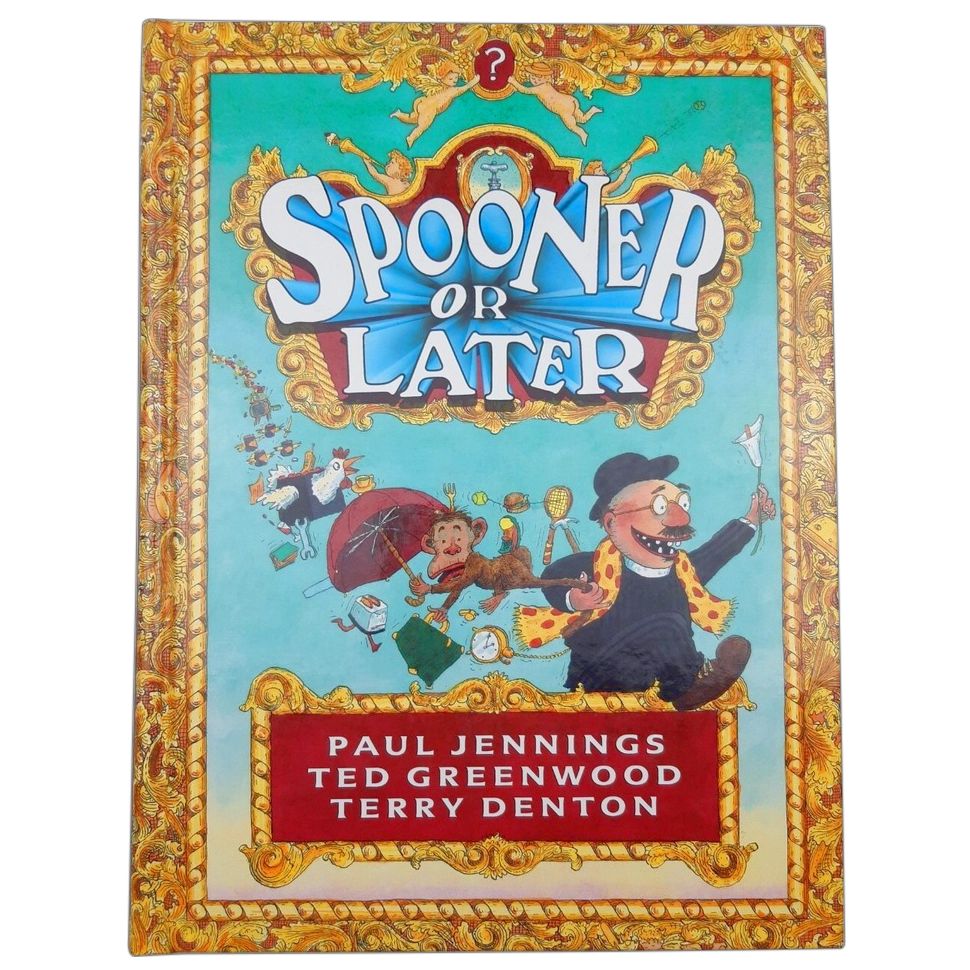
Part of my family’s canon is Spooner or Later, by Paul Jennings, Ted Greenwood, and Terry Denton.

The cover for the book Spooner or Later. It has a golden border with the title and authors set prominently. In the center is a cartoonish illustration of a man in a bowler hat.

A spoonerism is a kind of wordplay where you can swap the starting sounds of words in a phrase to make another valid phrase.

For example, “shake a tower” becomes “take a shower”.

It’s like dyslexia for fun.

Spooner or Later was that plus I spy.

An open book. In the center is an illustration of a fat man running. Around the edge of the page are many smaller illustrations, one of which is a rat flexing its muscles.

“Fat Man’s Race” (the captioned & skewed illustration in the center of the left page) becomes “Rat Man’s Face” (the image on the border of a costumed rat flexing his muscles.)

This book was a measuring stick of my cerebral function. By the sage of icks, I could only solve pimple suns at the start of the book, but after months of prayerful cactus, I was eventually able to finish the hack’s bard puzzles.

Solving them becomes pretty straightforward as your vocabulary expands, but creating them is a whole other skill.

The most straightforward way to do it is to think of two words that rhyme, then think of two other words that rhyme that start with the same sound as the first two words.

Word and Nerd

Whoa and Know

Know word? Whoa, nerd!

In my experience, it's difficult to think of the second pairing, let alone a pair that make sense together. It's a thing our brains aren't particularly good at, because it requires a kind of exhaustive search through the dictionary, and often you find a pairing that isn't grammatically equivalent like... “lead bike” and “bedlike”.

But if we could programmatically generate hundreds of pairings at once, we could scan and pan them quickly.

Sounds like a cob for... jomputers?... A mask for tachines?

Whiting rode for a pool that tears curds

A charcoal illustration of a knight atop a horse. Before him lies a pond of cheese curds, signposted: 'The Magickal Pond of Mozzarella'

The key is to use the CMU Pronouncing Dictionary filtered down to common English.

That gives us a list like so:

BALL  B AO1 L
TELEPHONE  T EH1 L AH0 F OW2 N
COLD  K OW1 L D
TALL  T AO1 L

We can split each of these words into its onset and tail. The onset is all the sounds before the first noun sound and the tail is everything after.

So, the onset of ball is B and the tail is AO1 L.

Quiz: what's the onset of cold? Runny nose. Ha ha, just joking. It's K.

Grouping words by their tails gives us a list of words that rhyme.

{
    "AO1 L": [
        { "word": "ball", "onset": "B" },
        { "word": "tall", "onset": "T" }
    ]
  }

Ergo, tall rhymes with ball Q.E.D. Behold the awesome power of programming.

Then we just need to find other words that rhyme and begin with B and T.

We go through our tail map and filter it down to entries that have the onsets B and T in them.

    {
    "IH1 N": [
        { "word": "bin", "onset": "B" },
        { "word": "tin", "onset": "T" }
    ],
    "ER1 N IH0 NG": [
        { "word": "burning", "onset": "B" },
        { "word": "turning", "onset": "T" }
    ]    ,
    // etc...
}

And with this data structure at hand, you have everything you need to make a nice little UI to find spoonerisms. Most of them will be trot hash, but as Napolean said, bots of lad is like a grit of bait.

That's what I found with my finder, at least.

Some (I) might argue that the best path to making spoonerisms that are actually delightful is to chisel them out with a thesaurus and rhyming dictionary, but for rapid ideation, this approach gives a reason t' doubt.

manbait

I turned my adblocker off youtube for a minute to see what it was like to have recommendations appear again.

Manbait everywhere.

Arm wrestling muscle beach in grandpa latex. NBA highlights but they get increasingly ____. So many prank videos.

I'm sure the videos are entertaining and they take a lot of time and effort to make and they've brought a lot of joy to the world. But the gestalt is so bleak to me now.

Peanut butter with poison stirred in. A piece of cheese atop a springloaded metal hinge. A narrow stick balanced atop an open bucket with no way to get out.

I want to try and trick the algorithm to showing me bait for other demographics. What's girlbait? What's seniorbait?

zootopia 2

This movie should have been called Hisstopia because of how bad and about snakes it is.

I remember liking the first one as an effective buddy cop conspiracy with a lot of worldbuilding. This one's a complete rehash, but the main character's emotional progress has been inexplicably reset🐇 which makes it feel somehow both painful and pointless to see her treat her best friend like shit for another entire movie (the main violation is that she consistently disregards his opinions and ignores his requests)

Keep reading →

future future future

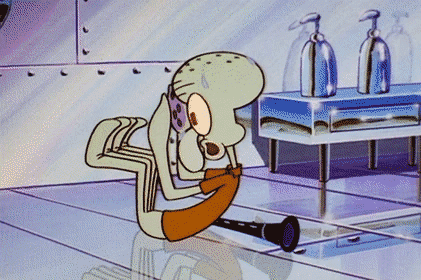
squidward from spongebob lying on the floor saying 'future' repeatedly from the episode 'SB-129'

One of my friends just sent me a voice note making a couple of points:

  1. Visual generative AI is getting really good
  2. This is starting to do weird things on our video and image-based social media networks
  3. Influencers are nervously wondering if their industry will survive when brands can have individualized, hot & funny digital avatars market products to consumers directly
  4. Maybe we shouldn't be posting photos of ourselves online if they can be used by bad guys to make deepfakes of us?
  5. Awareness of all of this is a privilege: less-informed people will be exploited by these systems that they don't understand
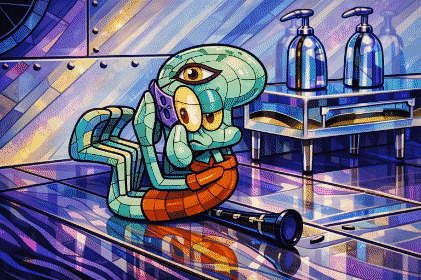
squidward doing the future pose, but with a style transfer from 'a single piece of american cheese'

I basically agree with all of that, though I'm very uncertain as to what the end state of any of it is.🌦️

Governments are trying to clamp down on unfettered internet access: age-restricting websites, banning social media for teens. Maybe this leads to the beginning of a utopian society-wide detox from the internet:

At the end of such a day [of no phones] in France, my students weren’t pining for two hours on Instagram. If I’d handed them all devices at 6 every night, I’d have witnessed a lot of rotting. Here’s what happened instead: Ping-Pong, knitting, charades, climbing hay bales, letter writing, stargazing, sitting through two-hour dinners with nary a device on the table. Between bursts of writing, my students actually rested. Like the kids that they still are, they played.

After four weeks of these new rhythms, my students were raving to me about the effects: Will was sleeping more deeply than ever before, Gaby was reading quickly again, Devin had shocked himself not only by his output (15 essays in four weeks) but also by how long (a full six hours) he could just sit in a room — alone — and write.

Colleen Kinder, What Happened When My Yale Students Gave Up Their Phones for Four Weeks

Or maybe it births a new, worse-than-what-we've-already-got, adults-only internet with the legal system's blessing to be as X-rated as profitable👯‍♀️:

No one, besides maybe Neil Postman, could have predicted the formation of an international pornography cult. But the gooners’ rise does, in retrospect, possess a certain inevitability. Anyone paying attention to online porn’s evolution over the preceding twenty years could sense, in its brain-melting variety and abundance, the blueprint for a new kind of person, a new relationship to human sexuality. In my own lifetime, I have seen incredible advances in the world of pornography. When I was a boy, there were still porn magazines; fathers hid them on high shelves. You stood on stools and gawked at them in a state of mortal terror. But by the time I started college, in the late Aughts, the foundations of our present porn environment were firmly established. Widespread broadband internet had enabled the rise of the so-called tube sites: platforms like Pornhub, which streamed untold numbers of clips free of charge. Then came the smartphones, transforming every toilet stall into a potential porn theater. The very air, suddenly, was misted with pornography.

Daniel Kolitz, The Goon Squad

The problem is not just porn sites. They are of course a massive concern. Kids as young as nine are addicted. The average age to discover porn is now 13, for boys and girls. And many in my generation are now realising just how much being raised on porn affected them, believing it “destroyed their brain” and distorted their view of sex.

But the problem is bigger than that. Porn is everywhere now. TikTok is serving up sex videos to minors and promoting sites like OnlyFans. The gaming platform Twitch is exposing kids to explicit live-streams. Ads for “AI sex workers” are all over Instagram, some featuring kids’ TV characters like SpongeBob and the Cookie Monster. And there’s also this sort of “soft-porn” now that pervades everything. Pretty much every category of content that kids could stumble across, from beauty trends to TikTok dances to fitness pages, is now pornified or sexualised in some way for clicks.

Freya India, The Problem With Everything Being Pornified

As with all things, it's probably going to be a bit of both.

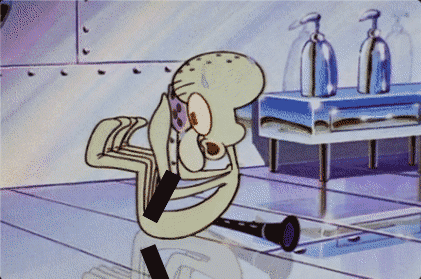
squidward doing the future pose, but he's naked and there's a black bar covering his genitals

The consequences of AI are going to be massively systemic.🫏 I don't think my efforts to unzuck myself will show up in any historian's account of the 21st century.

But locally, I think it makes a difference. All I really want to do is read and write and interact with my close friends. I have no desire to grow a following, or build a network, or develop my personal brand.

If you do, it's harder. You can use ActivityPub🐑 or ATProto: own your algorithm and be selective with your privacy settings🕵️, but these networks are still juvenile and the federated interoperative dream is still on its way. Most people still don't really get what Mastodon is and won't know how to follow you from the walled garden they're held captive in. "The internet" is just five websites that all look the same. It's asking an arm and a leg of someone to not use Facebook Messenger or to follow your travel updates via RSS.

But I'm okay with doing this because I also believe that being on those platforms myself is just bad for me. It's like, yeah, if you want to hang out you have to come jogging with me, but we should all jog more and jogging alone is still better than nothing at all.

And get this:

j bl ogging

🤯

On my friend's point that "technology is unfair", yeah, it sucks. I get so mad whenever I help my mum with some tech thing and I see how confusing the experience is for her. Windows has changed for the umpteenth time, and half of her google search results are ads or spam, and her apps don't work anymore because her laptop is 5 years old.

Each of these things has a specific fix that I can implement, but I'm annoyed that I have to do it at all, and like the unzucking, it's not a systemic fix. There are billions of people out there without a tech support family member.

One thing I'm a little optimistic about is that language model assistants are probably going to help most people be safer on average. There will be accidents and exploits and prompt injections and all the bad things, but a world where the majority of people ask claude "Hey Claude, is this legit?" before doing something they're uncertain about probably has fewer life-ruining errors in it. Depending on how life-ruining you think it is to lose the ability to think for yourself.

Keep reading →