goated pulls from my local little free library
In Montreal, there’s a number of small, enclosed, wooden shelves on street corners where you can “take a book, leave a book.”📚
In the past two days I got some fucken scores:
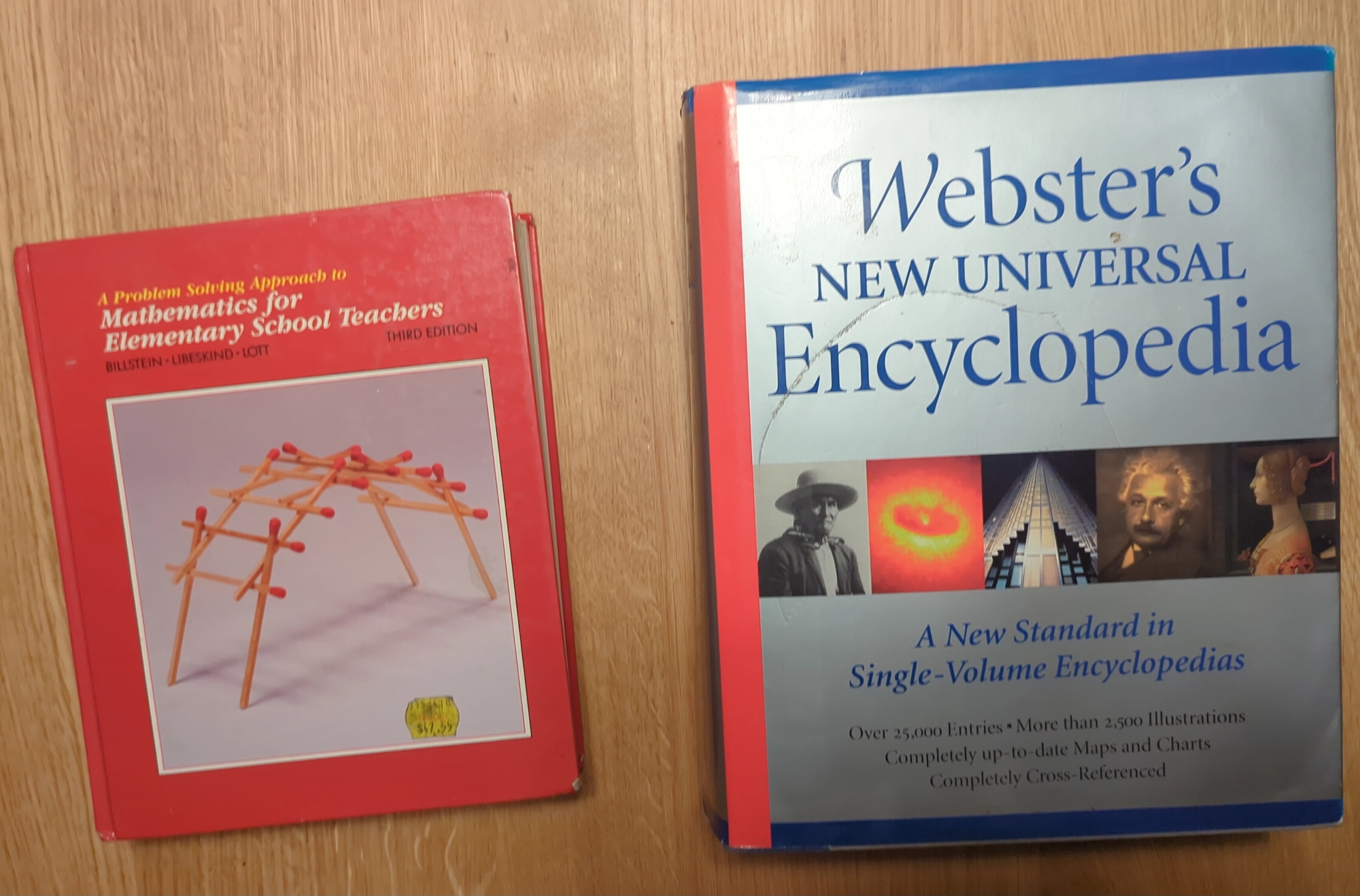
That’s Mathematics For Elementary School Teachers (1987 Ed.) and Webster’s New Universal Encyclopedia (1997 Ed.)
I love them. It’s so nice to just read a big reference book.
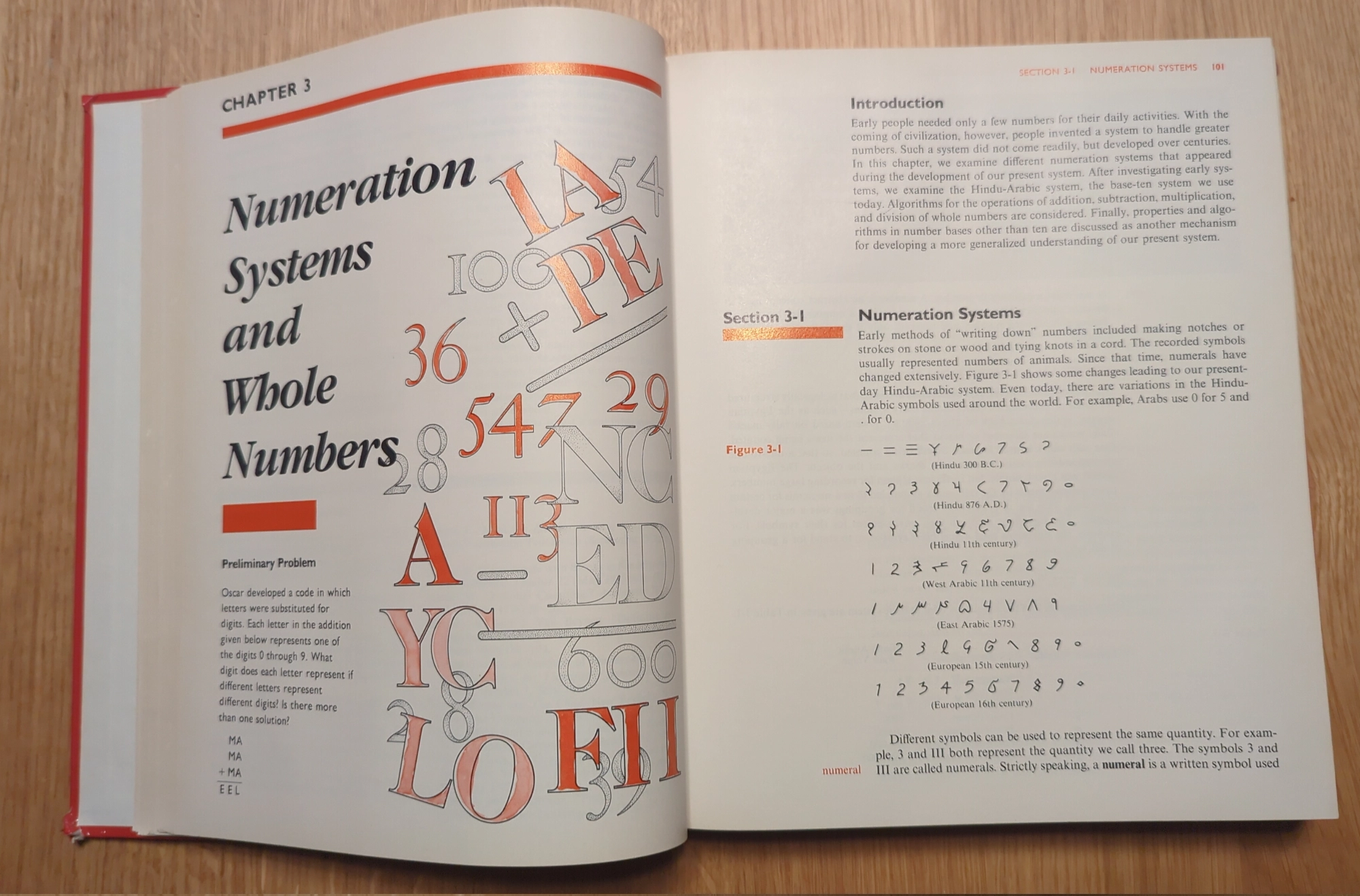
In the maths book, the typesetting and layout is excellent. It feels so carefully crafted. Plus➕ elementary level maths is very approachable. Reading it feels like playing Breath of the Wild, where every new page is something interesting and joy-bringing to think about.
The encyclopedia also rules. I love Wikipedia rabbit holes as much as the next guy, but there’s something so arbitrary and serendipitous in reading an alphabetically arranged list of 25,000 important things. It also has human errors that are charming. They misspelled Vostok here:
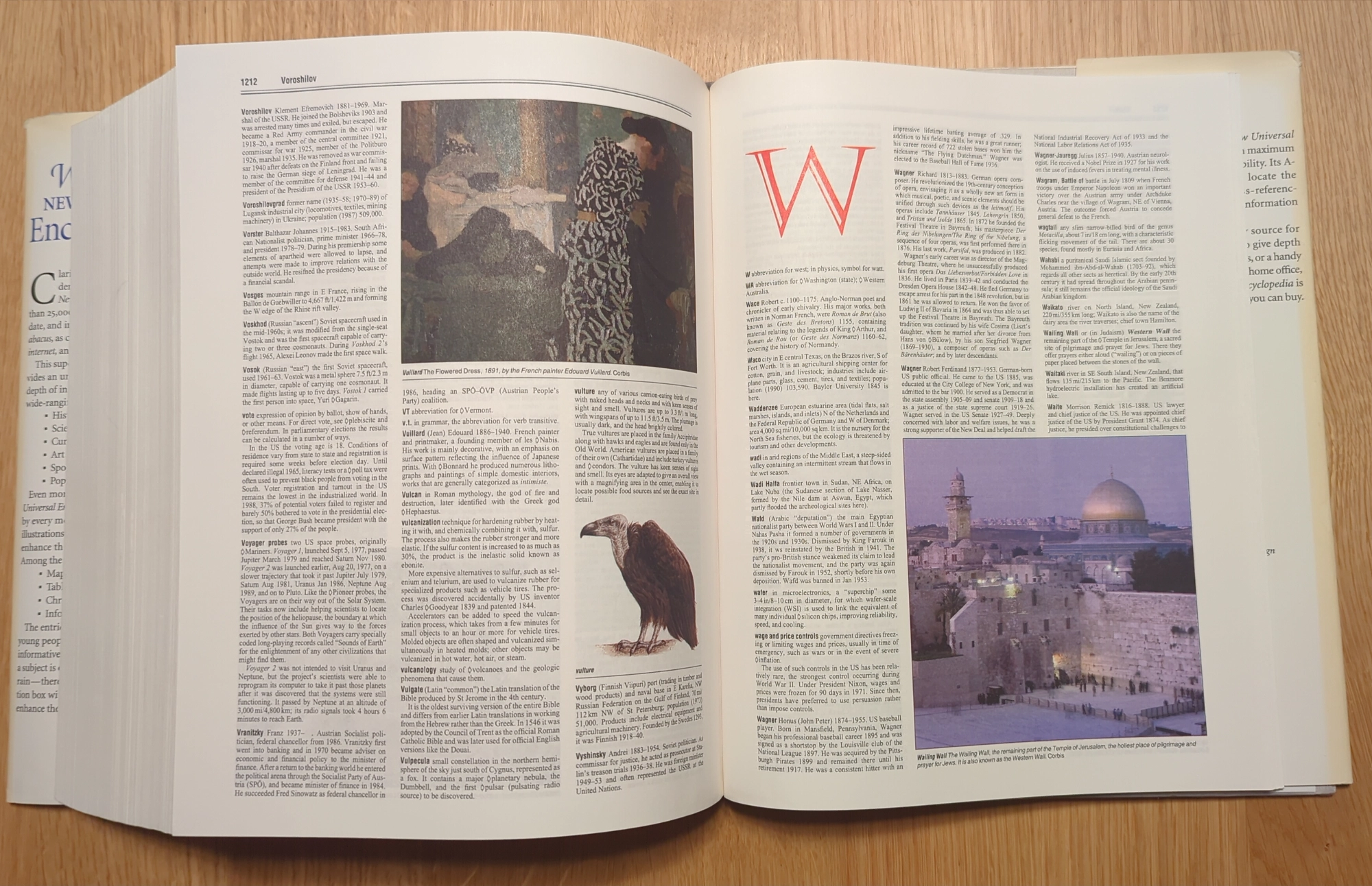
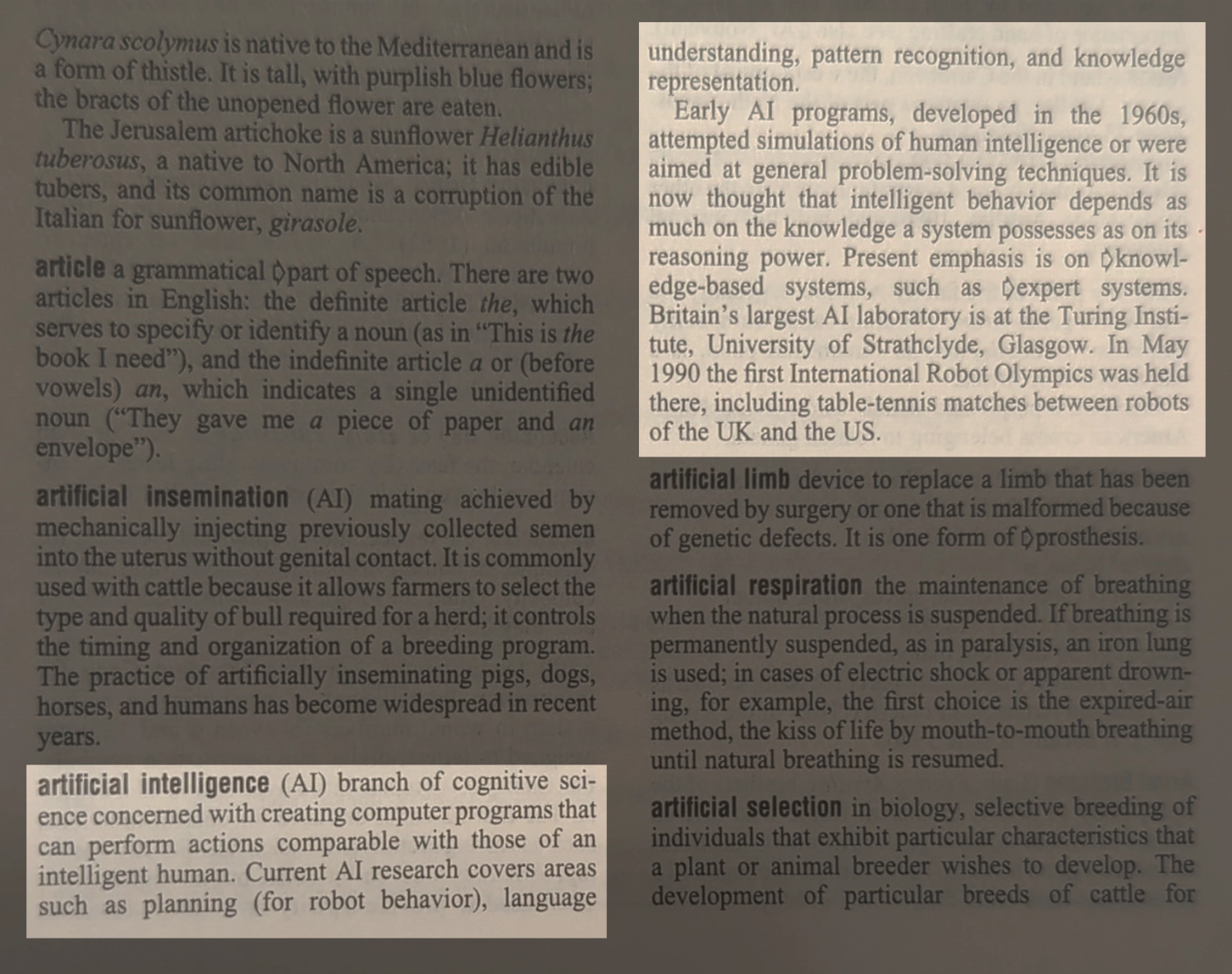
Both books are also dated in their ways. The maths one was written for USAmerican teachers to learn how to teach maths, yet it only uses the metric system - an artifact of a more hopeful time for mathematics educators, I suppose. The encyclopedia is missing almost everything that has happened during my lifetime. Here’s what it says on AI:
Maybe it’s nostalgia or novelty, but learning from a book feels so much better than reading the equivalent text on a website. Even the highest quality, most beautiful maths website I know of doesn’t excite me the way it does to read a physical object that had thousands of person-hours poured into its production.
To whoever put these books in the local little free library, thank you ♥